
Aldo Starker Leopold Wild Trout Award
Application Deadline: TBD


The Wild Trout Symposium Organizing Committee established the Aldo Starker Leopold Wild Trout Medal in 1984 as a continuing memorial to this distinguished naturalist, teacher, author, and an important participant in these symposia, who was the son of Aldo Leopold. Two Wild Trout medals are conferred, one to a professional and one to a nonprofessional individual who in the eyes of their peers have made long-time and significant contributions to the enhancement, protection, and preservation of wild trout.
Nominees must attend the symposium.
Aldo Starker Leopold Wild Trout Medal - Professional
Aldo Starker Leopold Wild Trout Medal - Non-Professional
Starker Leopold, world-renowned scientist, dedicated teacher, distinguished author, outstanding naturalist, beloved angling companion to many, and an influential speaker and participant at both Wild Trout I and II died on August 23, 1983. His death occurred a year before Wild Trout III, in August of 1983, at his home near the University of California Berkeley campus where he taught and was the retired head of the Zoology Department. Many of us still miss him and his counsel.
At the suggestion of Nathaniel P. Reed, former Assistant Secretary of the Interior, the federal official that first approved these Symposiums, the Sponsoring Committee established The Aldo Starker Leopold Wild Trout Award as a memorial to Starker in 1984.
A. Starker Leopold was born in Burlington, Iowa, the eldest son of Aldo Leopold. Following in his father's footsteps, he became one of the world's most influential and honored authorities on wildlife ecology and management. He attended the University of Wisconsin, Yale Forestry School, received his Ph.D. from the University of California at Berkeley in 1944 and retired there as Emeritus Professor of Biology in 1978.
Starker Leopold was heavily involved in public policy at the highest levels. In 1968 he chaired the Special Advisory Board on Wildlife Management of the Department of the Interior which led to significantly new national park and refuge policies. He was a member of the Advisory Committee on Predator Control and an international consultant on wildlife conservation policy. He served as a Director and President of the California Academy of Sciences, as a Director and Vice President of the Sierra Club and engaged in a broad range of public service activities.
Leopold addressed the negative impacts of multiple use at Wild Trout I. At Wild Trout II he spoke about degraded wild trout populations and the need to give higher priority to land use patterns and the physical condition of our lakes and streams. The following year Starker told the Federation of Fly Fishers annual convention, "For my part, I believe that the limited budget available for trout management is largely misspent on trivial activities, of no present value, such as the catchable trout program. Unless we bite the bullet and attack the habitat problem with vigor, the future of quality trout fishing in America is unpromising."
Starker's main goal was a world suited to wildlife and therefore fit for people. His personality was characterized by eminent academic and scientific achievements, love of the outdoors, positive personal warmth, and sensitivity. A. Starker Leopold was a friend to fish and wildlife, and to all of us.
As a continuing memorial the Aldo Starker Leopold Medals are given at each Symposium to a professional and a nonprofessional who over time have made significant individual contributions to the enhancement, protection, and preservation of wild trout in North America. Prior to each symposium, nominations are solicited from the sponsoring organizations, biologists, administrators, and conservationists that attend these wild trout symposiums and the wild trout community.
National Park Service Biography of A. Starker Leopold
University of California Biography of A. Starker Leopold
Past Recipients
 |
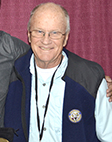
Robert Gresswell WT-XIII, 2022 Professional |
 |
Barry Nehring WT-XIII, 2022 Professional |
 |
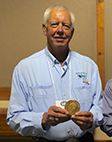
Joe McGurrin WT-XII, 2017 Professional |
 |
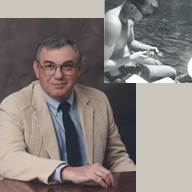
David Sweet WT-XII, 2017 Nonprofessional |
 |
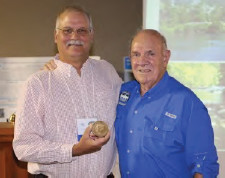
Jerry Mallet WT-XI, 2013 Professional |
 |
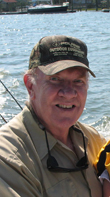
Mark Hudy WT-XI, 2014 Professional |
 |
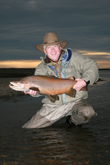
Stephen E. Moore WT-X, 2010 Professional |
 |
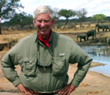
Tom P. Pero WT-X, 2010 Nonprofessional |
 |
Nathaniel P. Reed WT-IX, 2007 Professional |
 |
Nick Lyons WT-IX, 2007 Nonprofessional |
 |
Ray J. White WT-VIII, 2004 Professional |
 |
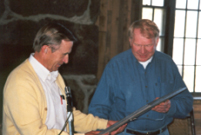
R.P. Van Gytenbeek WT-VIII, 2004 Nonprofessional |
 |
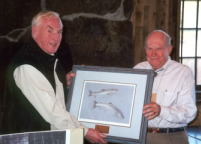
Robert L. Hunt WT-VII, 2000 Professional |
 |
Bud Lilly WT-VII, 2000 Nonprofessional |
 |
Roger Barnhart WT-VI, 1997 Professional |
 |
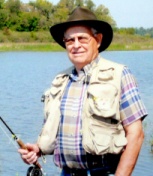
Ernie Schwiebert WT-VI, 1997 Nonprofessional |
 |
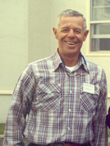
Ron Jones WT-V, 1995 Professional |
 |
Gardner Grant WT-V, 1995 Nonprofessional |
 |
Frank Richardson WT-IV, 1989 Professional |
 |
Otto Teller WT-IV, 1989 Nonprofessional |
 |
Bob Behnke WT-III, 1984 Professional |
 |
Marty Seldon WT-III, 1984 Nonprofessional |
Biographies
2017 Professional: Joe McGurrin
Joe has devoted his career to conserving wild trout across North America. He has spent more than 25 years with Trout Unlimited and has been instrumental in developing TU's conservation plans for wild trout on Federal lands and on state-owned lands. He has been a leader in formulating TU's "Home Rivers Program", an enormously successful venture that has expanded to 12 major restoration projects across the U.S. Over and over, Joe has demonstrated his passion for native trout conservation and restoration. He has been particularly effective in bringing together Federal, state, tribal, and local organizations to support native trout conservation. He spearheaded efforts to raise funds for Gila Trout restoration in Arizona and New Mexico, where great strides have been made in reintroducing Gila Trout to burned over watersheds. His passion and strategic vision for native trout conservation has helped TU leverage a myriad of funding sources, build new partnerships, recruit volunteer boots on the ground, and apply science to direct on-the-ground conservation work.
2017 Nonprofessional: David Sweet
David Sweet has been a champion for conservation of the Yellowstone Cutthroat Trout. He has made countless presentations to Trout Unlimited Chapters and other public audiences throughout Wyoming, Colorado, and Montana, educating them about the importance of supporting efforts to save Cutthroat Trout, particularly in Yellowstone Lake. He has been instrumental in raising hundreds of thousands of dollars to pay for control of Lake Trout, which had devastated Yellowstone Cutthroat Trout in Yellowstone Lake. He has organized several volunteer projects to assist in Lake Trout suppression efforts, tag Lake Trout, and conduct movement studies. His enormous efforts have greatly enhanced the National Park Service's successful program to suppress Lake Trout and assist the recovery of Yellowstone Cutthroat Trout.
2014 Professional: Mark Hudy
Mark Hudy, Senior Science Advisor-Fisheries, USGS is the 2014 ASL Professional recipient. Mark has a passion for wild trout and for providing scientific data that will inform management decisions. He has been no stranger to this meeting and has presented results of his work at several of the Wild Trout Symposiums. He began his career as a trout biologist for the Arkansas Department of Game and Fish and then moved to South Carolina as the Forest Fish biologist for the Sumter National Forest. After a short stay he moved to Virginia where he was the fisheries Biologist for the George Washington and Thomas Jefferson National Forest. In this position he initiated the forest monitoring program based on water quality and macroinvertebrates. He also spearheaded acid deposition mitigation using helicopter delivery of lime on several acidified streams that since recovery have served as long-term monitoring sites for brook trout population response.
Apparently this position did not have enough challenges for Mark so he moved to US Forest Services Washington office where he served as the Eastern and National Aquatic Ecologist, and as the National Fisheries Program Leader, where he helped lead the Agency's adoption of aquatic organism passage (AOP) assessments, provided training in AOP design, promoted use of large wood in aquatic habitat enhancement, and worked tirelessly to benefit trout and a host of non-game species on National Forest System lands. Then somehow in his role as National Aquatic Ecologist, he got assigned to work with Department of Biology at James Madison University, Harrisonburg, VA, where he taught courses in Biological Research in Freshwater Fish and Aquatic Ecology, and advised and mentored 8 graduate students and over 16 undergraduate students.
He and his students have tackled a number of important research questions applying innovative approaches in the realms of brook trout ecology, acid rain remediation, restoration of spring creeks, riparian tree survival, coldwater habitat vulnerability to climate change, instream habitat, and aquatic organism passage, as well as behavior of white sucker, sculpin and brook trout. During this time he also worked with the Eastern Brook Trout Joint Venture and used GIS tools to translate a range wide status and threats and assessment into a range wide map that displayed the current state of brook trout into a visual tool that is easily understood by resource professionals and the public. This work served as the foundation for the Eastern Brook Trout Joint Venture Conservation Strategy.
A couple of years ago Mark moved to his current position as Senior Science Advisor-Fisheries, USGS. The one thing we've never figured out about Mark is how a guy that can't hold a job can accomplish so much. Please join us in congratulating on a job well done.
2013 Professional: Jerry Mallet
Jerry began his career in 1956 as a fisheries aide conducting management creel surveys on the Lochsa River that later influenced his views on the merits of special regulation fisheries. During his 44 year tenure with Idaho Fish and Game (IDFG), he subsequently held nearly every professional fisheries position in the agency including Fisheries Research Biologist, Regional Fisheries Manager, and Anadromous Fisheries Manager, Fisheries Research Manager, and eventually Regional Supervisor, Assistant Director, and interim Director.
He authored 40+ reports, popular articles, and papers, the vast majority of which improve our understanding of both wild resident and anadromous salmonid stocks. Among his early achievements, his ground breaking Master's Degree work (1963) on the Middle Fork of the Salmon still stands as one of the definitive life history studies on Westslope Cutthroat trout. Jerry was subsequently involved in the early development of salmonid special regulations including fieldwork and associated Idaho Fish and Game efforts to obtain public support for Westslope Cutthroat trout protection on the Middle Fork Salmon, St. Joe River, and Lochsa River and should be remembered to current generation of biologists as one of a small, group of predecessors willing to buck convention and look at managing wild trout in another way. Jerry was an innovator and, in the 1970's authored IDFG reports on Fishery economics and a methodology study to develop evaluation criteria for wild and scenic rivers. He presented and wrote a thoughtful article entitled "Catchable Trout and Wild Trout Management in Idaho" as part of the Wild Trout- Catchable Trout Symposium (Moring 1978) that presciently summarized what we know today about hatchery: wild trout competition.
In addition to his numerous efforts on resident wild trout, he was a knowledgeable expert on Idaho Steelhead Trout and over multiple decades was involved in numerous technical advances and courageous policy positions advocating protection and restoration of Idaho stocks. Over his career Jerry mentored dozens of IDFG research and management employees working on various wild trout studies. Despite retiring in 2000, Jerry has remained professionally active, serving on the Pacific Fishery Management Council serving over 20 years until 2011 on a body overseeing harvest management for a wide array of species including anadromous salmonids. Through his involvement in the early development of special regulations and subsequent contributions across a broad salmonid management spectrum, Jerry Mallet has played a significant role in the conservation of wild trout resources in Idaho and far beyond.
2010 Professional: Stephen Edward Moore
Stephen E. Moore received a B.S. Biology from Western Carolina University and an M.S. in Biology from Tennessee Technological University. He was employed briefly by the Florida Game and Freshwater Fish Commission and has been with the National Park Service since 1985. He is presently Supervisory Fishery Biologist, Great Smoky Mountains National Park. Steve has been heavily involved in native brook trout inventorying, monitoring, reintroduction, and restoration, monitoring large stream and lake fish communities, acid deposition, riparian restoration, and angler use surveys.
Some of his specific projects included: Over 24 miles of stream restored within Great Smoky Mountains National Park (GRSM) for native southern Appalachian brook trout, as well as an additional 13 miles and two lakes for various other species; GRSM stream projects using backpack electrofishing gear southern Appalachian brook trout; projects using Antimycin-A to restore: southern Appalachian brook trout, USFWS ponds, Crater Lake NP (bull trout), Great Basin NP (Bonneville cutthroat trout), and North Cascades NP (fishless/bull trout). He has consulted on native fish restoration projects at: Rangell St. Elias, Rocky Mountain, Olympic, Yellowstone, and Great Sand Dunes NP's.
Steve Moore has published fisheries management and water quality articles in a variety of journals including: Fisheries; North American Journal of Fisheries Management; Water, Soil and Air Pollution; Archives of Environmental Management and Toxicology; Journal of Environmental Engineering; and USDI NPS Scientific Reports. He has served on roughly 16 M.S. and Ph.D. student graduate committee's, sponsored several fisheries interns and cooperated with researchers working on park-related research at Tennessee Tech, University of Tennessee, Western Carolina University, Haywood Tech Community College, Virginia Tech University, Purdue University, Fort Valley State University, Maryville College, Clemson University, University of NC-Asheville. He has also mentored and supervised more than 250 students and seasonal fisheries technicians during their field seasons at GRSM who now serve in the fish and wildlife profession throughout the country.
Steve Moore has worked with more than 50 non-government organizations, state and federal agencies and private groups on fisheries projects throughout the country totaling more than $2 millions dollars in direct and in-kind donations and volunteer time. Some of the groups included: Trout Unlimited, Federation of Fly Fishers, Cannon USA, Student Conservation Association, NC Wildlife Resources Commission, TN Wildlife Resources Commission, SC DNR, Georgia DNR, US Forest Service, US Fish & Wildlife Service, TVA, TN Department of Environment and Conservation, NC Department of Environmental Quality, TN Brookies, Conservation Fisheries, Inc., National Fish & Wildlife Foundation, Eastern Brook Trout Joint Venture, Ball Corporation, Coors, USA, Friends of GRSM, Little River Outfitters, National Parks and Conservation Association, Thor-Lo Corporation, Cherokee Boys Club, and Southern Living Magazine.
Steve has been managing brook trout restoration with his latest project, the Lynn Camp restoration project (9.5 miles of low elevation habitat [less than 3,000 feet] restored using antimycin. He is the lead author of "A Field Manual for the Use of Antimycin A for Restoration of Native Fish Populations,"" a user manual for the National Park Service, that will be used by the EPA and appended to the new antimycin label when re-registered in 2010 and won the EPA Directors Award for publication.
He assists other National Parks with native fish restoration projects are always special to him and has coordinated a long term water quality program within GRSM since 1993, which is providing the data researchers need for modeling inputs to determine total maximum daily loads (TMDL's), critical loads (CL's) and other data essential to protect and preserve the fauna of GRSM for future generations
Stephen Edward Moore has been an active participant in the wild trout symposia for over twenty years. He coauthored a Great Smokies National Park native book trout restoration project at WT-IV in 1989 and continued on the Program Committee and as a Panel Moderator though Wild Trout through WT-V and then WT-VI in 1997. Steve joined the Symposium Organizing Committee as cochairman of the Program Committee 2000 and was also Proceedings Coeditor for WT-VI. He also coauthored presentations at WT-VIII-2004 and WT-IX-2007. Steve Moore made a major seven-year commitment of significant amounts of time and effort as Symposium Chairman of both WT-VII and WT-IX. Steve's calm personality faced many organizational and funding difficulties. In every instance, his professional judgment and management style elevated the symposium and coalesced the organizing committee into an improved functional team.
2010 Nonprofessional: Thomas R. Pero
Thomas R. Pero was born in Fall River, Massachusetts and caught his first fish on a fly, a bluegill on a little yellow popping bug, in the summer of 1967. At age 18 he began a life of service to trout and salmon by becoming the youngest founding president of a Trout Unlimited chapter. During the 1970s his early writing helped focus attention on the neglected salter brook trout and sea-run brown trout fisheries of Cape Cod. As membership coordinator, he would go on to personally organize a record six new state councils of TU and more than 25 local chapters from Maine to California.
In 1977 at age 23, Pero became the first full-time editor of Trout Unlimited's Trout Magazine, where for 16 years he developed an international reputation for excellence and quality. Twice during his tenure the Natural Resources Council of America named Trout as conservation magazine of the year. Pero helped a generation of volunteer angler-conservationists better understand the biology and ecology of salmonids through articles that both educated and entertained by such noted scientists as Dwight Webster, Ray White, Robert Bachman and Robert Behnke. Tom Pero has attended several wild trout symposia and was on the Photography Committee at both WT-II and WT-IV.
Tom took up residence in the Pacific Northwest in 1984. His landmark story, "Splendid Skeena," focused international attention on the plight of one of the great remaining wild steelhead runs and helped bring action at the highest levels of Canadian government.
Tom Pero's talent and publishing expertise were recognized when he founded Wild Steelhead and Salmon Magazine and then Fish & Fly and from his many writing and photography awards, including the Ted Williams Miramichi Salmon Association Award for journalistic excellence. In 1993 he was a co-founder of the Wild Salmon Center, Portland, Oregon. Tom's programs and lectures always attract large crowds. Tom's most recent book is "Till Death or Fly Fishing Do Us Part," a collection of humorous essays. The most respected fly-fishing authors in the world have written for Tom's publications and Tom himself has sought trout, salmon, steelhead, tarpon, bonefish, permit, stripers, bluefish, and Pacific sailfish from Russia to Guatemala.
Tom's new publishing company is Wild River Press. One of his first books, "Fly Fishing for Striped Bass" by Rich Murphy, was not only a national medalist at the 2008 Los Angeles Book Expo but received the highest praise from saltwater guru Lefty Kreh. Another book, "A Passion for Steelhead" by Dec Hogan, has become a new standard. Both blend instruction with a strong message of resource stewardship.
For more than three decades, Thomas R, Pero has been a leading advocate of wild trout, of all salmonids, and has been uniquely able to elevate a message of conservation to the public consciousness.
2007 Professional: Nathaniel Pryor Reed
Nathaniel Pryor Reed was born in New York City, July 22, 1933 and grew up in Florida, and Greenwich, Connecticut. As he matured, he fished and discovered the mysteries of sweet water streams, estuaries, sand lakes, and in the north, trout and salmon.
Mr. Reed received a B.A. from Trinity College, Connecticut in 1955 and served as an officer in the U.S. Air Force military intelligence service, retiring in 1959 with the rank of captain. He returned to Florida and began a career as manager of the family real estate business in Hobe Sound. He is an avid trout and Atlantic salmon fly fisher.
Reed's experience and active concern with environmental matters steered him into public life. He became involved with the problems of Everglades National Park, and was invited by Governor Kirk to become Florida's first governor's environmental advisor. Reed held a number of State positions and was a major factor in the purchase of 22 new Florida parks and wilderness areas.
Reed served as Assistant Secretary of the Interior for Fish, Wildlife and Parks in the Nixon and Ford administrations (1971-1977) with responsibility for the Bureau of Outdoor Recreation, the Fish and Wildlife Service, and the National Park Service. He was very concerned with fish and wildlife protection, public lands management, endangered species, and the establishment new parks and refuges. His opposition to dams, drainage ditches, and other pork barrel projects became three "60-Minutes" television segments.
Reed used his position in the Department of Interior to educate the administration and the general public on the centrality of conservation to American life. When Frank Richardson, Peter Van Gytenbeek, and John Peters first presented the concept of a Wild Trout Symposium, Nathaniel Reed enthusiastically supported the idea, provided the funding and directed Frank Richardson to coordinate and manage the event. Nathaniel was also an active participant sharing the podium with Starker Leopold.
Reed returned to Florida following President Ford's leaving office and continued to serve seven governors. Described by Bruce Babbitt, "Nat Reed is a lean, ruddy aristocratic sportsman.....a Republican in the spirit of Theodore Roosevelt, passionately committed to environmental causes." He became one of Babbitt's most trusted advisers in the 1990s.
Reed's friendship with Starker Leopold led to many trout fishing excursions throughout the west, both men preaching "wise land management and the value of clean water not only for trout but for all forces of life, including man."
Nathaniel P. Reed has been vice chairman of the National Audubon and of The Nature Conservancy Boards; member of the Natural Resources Defense Council; and on the boards of the National Geographic Society, the Everglades Foundation, Hope Rural School, American Rivers, the first chairman and founder of 1000 Friends of Florida, and advisor to many other environmental organizations. He has always been one of Wild Trout's greatest advocates and well deserving of the Aldo Starker Leopold Wild Trout Medal.
2007 Nonprofessional: Nick Lyons
Nick Lyons is a trout fisher's trout fisher. His books and regular magazine articles have made his life an open story that we all have enjoyed. Nick gained fame not only as a wild trout author but as the owner of Lyons Press and the excellence of its published works. Lyons Press was sold to Globe Pequot in Guilford, Connecticut www.globe-pequot.com in recent years and Nick is now enjoying life between his homes in New York City and Woodstock, New York.
Nick Lyons received a B.S., University of Pennsylvania, 1953; M.A. 1959, PhD in American Literature, 1963, University of Michigan, where the AuSable River was close enough to sandwich in between Milton and Keats. He held positions as Professor of American Literature and Writing, Hunter College, 1962-1988; Crown Publishers, Inc., 1965-1979--Executive Editor, developed the "Sportsman's Classics" series.
Mr. Lyons was founder and publisher of The Lyons Press (for a time called Lyons & Burford), where he edited and published more than 150 books on fly fishing, conservation, and natural history. His writings included the "Seasonable Angler" column for Fly Fisherman, 1977-1998, articles in Field and Stream, Outdoor Life, Sports Afield, Harper's, The New York Times, National Geographic, Outside, and elsewhere-about 400.
He is the author or editor of more than twenty books, including In Praise of Wild Trout, The Seasonable Angler, Bright Rivers, Hemingway on Fishing, Spring Creek, and Full Creel. In Fish Tales, Nick said, "In the best stories about Fly Fishing....the words have the warm colors of earth and water, not the jargon of the specialist; we meet real people, with warts and wit and maverick gestures; big fish are caught or lost; people say wild and spontaneous words; event becomes memory and sometimes, in the hands of a master, bleeds into art." Ed Zern said of Nick that "if he fishes as skillfully as he writes about it, I'd pay to watch him."
Several years ago, Lyons Press sent me a flyer of their current releases that added to my appreciation of the contributions made by Nick Lyons. A partial list of authors he helped develop at the time was substantial: American Fly Fishing, Paul Schullery; Caddisflies, Gary LaFontaine; Brook Trout and Early Love, James Prosek; Fly Fisher's Guide to Crimes of Passion, Seth Norman; Green River Virgins, Mallory Burton; Selective Trout, Swisher and Richards; Steelhead Country, Steve Raymond; Stillwater Trout, John Merwin; The Orvis Streamside Guide to Trout Foods, Tom Rosenbauer; The Seasons of a Fisherman, Roderick L. Haig-Brown; To Know a River, A Haig-Brown Reader, Editor Valerie Haig-Brown; Trout Madness; Robert Traver; Trout Magic, Robert Traver; Streamside Guide, Art Flick; and A Modern Dry Fly Code, Vince Marino.
Nick is married to Mari Lyons, an accomplished painter who has illustrated four of Nick's Books. They have four grown children.
2004 Professional: Ray J. White
The 2004 Aldo Starker Leopold Wild Trout Medal professional category awardee started his professional career as an Aquatic Biologist, Wisconsin Conservation Department Leader, and was a Visiting Scientist, Austrian Federal Institute of Waters Survey and Fishery Management. In 1965 he was an Instructor/Researcher, Institute of Hydrobiology and Fishery Science, University of Hamburg, W. Germany, and then a Graduate Research Assistant University of Wisconsin. Ray was a Postdoctoral Research Associate, University of Wisconsin and then Associate Professor Fisheries and Wildlife, Michigan State University. Ray spent nearly 20 years as a research biologist with the Wisconsin Department of Conservation before finishing his own Ph.D. and becoming a professor, and developed am exceptional knowledge of trout ecology and field biology. In 1990 Ray retired as an Associate Professor of Fishery Science, Montana State University, Bozeman. He presently has a private consulting firm, Trout Habitat Specialists, Redmond, Washington. Ray White is a consultant's consultant with time, service, and advice that continues to guide fishery conservation groups, private landowners, and international agencies.
Ray J. While received a B.A. 1957 and M.S. 1964, Zoology, University of Wisconsin-Madison. He continued in graduate studies in Hydrobiology/Fishery Science 1966-68, at the University of Hamburg, Germany and received his Ph.D. Zoology in 1972, University of Wisconsin-Madison, German language study 1964, Goethe-Institut, Lüneburg, Germany.
Ray continues to make public service contributions. He is a long-time technical advisor to Trout Unlimited, and a Scientific Advisor to groups such as the Yakima River Alliance and the Federation of Fly Fishers Steelhead Committee and many more. He has organized symposiums and functioned in the capacity as expert witness. Ray still teaches and is a member of a broad range of panels, committees, peer review committees, and Boards. He has published and presented papers internationally in English and in German and has been involved in writing for a number of scientific books and articles. Ray gave papers at the first and fourth Wild Trout Symposiums and is considered expert in trout habitat and restoration disciplines and for "Telling it as it is."
Ray's graduate students have never forgotten the things he taught nor the standards of honesty and excellence that he set. He encouraged his students to explore fluvial geomorphology, population and community ecology, animal behavior, and physiological ecology, and blend these disciplines in their work. He gave them the benefit of his broad knowledge and experience and they learned well.
In the early 1990s, Ray wrote an important series of articles on "Why Wild Fish Matter," and about the problems with hatchery trout, which had a very large impact on fisheries management and conservationists. He played an important role in causing agencies to reevaluate their programs and stocking practices, and set in motion better research into the effects of hatchery fish. Ray White has had an important impact on trout research and management for some 50 years, and is well deserving of the WT-VIII 2004 Aldo Starker Leopold Wild Trout Medal.
2004 Nonprofessional: R. Peter Van Gytenbeek
The WT-VIII Nonprofessional Division Award was conferred on a gentleman who was one of the founders of these symposia and who has combined a successful business executive career with a lifetime of service to wild trout. He has worked tirelessly to preserve wild trout and the habitat that supports them. He is an important member of the Washington State Fish and Wildlife Commission and has been a board member of the ALA, AMFF, FFF, ROMCOE, TU, and many more such organizations.
R. Peter Van Gytenbeek is the only person to have served both as Executive Director of Trout Unlimited and presently as President of the Federation of Fly Fishers. Van is a graduate of Princeton University, was the publisher of Fly Fishing in Salt Waters Magazine, is the author of "Way of the Trout," and has coauthored two other books. He has served on a number of Symposium committees including the Awards Committee.
As part of a series of successful measures on behalf of wild trout, Van recently waged a very difficult campaign that resulted in a Washington State moratorium on killing wild steelhead. Van's broad accomplishments have been in keeping with the traditions established by A. Starker Leopold.
2000 Professional: Robert L. Hunt
In his paper at WT-I in 1974, Robert L Hunt, the recipient of the 2000 Aldo Starker Leopold Wild Trout Medal in the professional category, called for more rational programs to manage wild trout, involvement in the biopolitical process, and the initiation of new wild trout research projects. Twenty years later at WT-V, Mr. Hunt reported on a Wild Trout Management Survey he conducted of six midwestern states. He compared his findings to Lee Wulff's advice in 1980 at WT-II, and found a considerable commitment to improved wild trout management.
Robert L. Hunt received his formal education from the University of Wisconsin-Madison and served as a graduate student advisor. He was employed by the Wisconsin Department of Natural Resources for 33 years, retiring in 1992 as Leader of the Cold Water Research Group. Mr. Hunt is an American Fisheries Society Certified Fisheries Scientist and was elected to the AFS National Hall of Excellence in 1999. He has received a number of other awards including the 1982 Gulf Oil Conservation Award, served as a technical review consultant to four professional journals, and was an advisor to a Trout Unlimited scientific advisory board. His efforts generated public support for a State Inland Trout Stamp that generates $1,000,000 annually for trout habitat improvement.
Mr. Hunt promoted the use of trout stream habitat improvement as a management tool and conducted research that not only produced new instream structures, but clearly demonstrated their benefits to trout populations.
He pioneered evaluation of stream bank debrushing and the use of brush bundles and half-log structures. His wild trout research was done at a time when widespread indiscriminate stocking of hatchery trout was the major trout management thrust. His findings not only generated an awareness of the role of wild trout but resulted in the establishment of a trout stream classification system that recognized the wild trout component. Many streams were eliminated from Wisconsin's stocking roll. He spent his career researching the ecology, habitat relations, and management of wild trout populations and served as an international consultant.
In 1975, Mr. Hunt was co-chairman of the first Workshop on the Management of Brook Trout and helped organize a similar symposium on brown trout. In 1978 he organized the first North American Trout Stream Habitat Improvement Workshop, held every two years with international participation.
Robert L. Hunt published 46 papers and one stream habitat book, "Trout Stream Therapy." Two of his widely known bulletins are titled, "Production and Angler Harvest of Wild Brook Trout in Lawrence Creek, Wisconsin" and "Responses of Brook Trout to Habitat Development."
The Wild Trout Symposium was pleased to honor this outstanding fisheries scientist, Robert L. Hunt, for his long-term contributions to the cold-water fishery resource with its Aldo Starker Leopold Wild Trout Medal.
2000 Nonprofessional: Walden Francis "Bud" Lilly
Bud Lilly is a fourth-generation Montanan who became a celebrated fly fishing guide, teacher, outfitter, and fisheries conservationist. He was born in Manhattan, Montana and grew up in an era when anglers filled their creels to capacity, but as his love and success at fishing grew; he was soon returning most trout to the river. Bud saw sea duty in the Atlantic and Pacific as an Ensign in the US Navy during World War II and then returned to Montana to continue his education. He received his B.S. from Montana State University, an M.S. from the University of Montana, and taught high school science for 22 years.
During the summer, he ran the Bud Lilly Fly Shop in West Yellowstone, that in 1970 became a full-time operation when he retired from teaching. During his 31 years in West Yellowstone, Bud met thousands of anglers, including international dignitaries and presidents. Bud was married to Pat Bennett until her death in 1984. They raised three children. His youngest son, Greg, a speaker at Wild Trout II, is a guide and runs a fly fishing shop in Sheridan, Montana. Bud is now married to the former Esther Simon, past Executive Secretary for TU and the FFF. They reside in Bozeman, Montana with Esther's two children. Bud is once again an outfitter, running his fishing lodge in Three Forks, Montana.
Bud was among the trout anglers that began questioning management policies and laws in the mid 50's and 60's. In 1961 he was a founder and first president of the Trout Unlimited chapter in Montana and continues to be an active force in its activities. He was a charter member of the Federation of Fly Fishers in 1964 and has been a FFF National Director and Senior Advisor. In 1984, Bud was the first curator of the International Fly Fishing Center established by the Federation of Fly Fishers in West Yellowstone and that same year received the FFF's most prestigious Man of the Year award.
Bud's impact on angling was noticed when in 1985 he was appointed a Montana Ambassador by Governor Swinden and then reappointed by the two subsequent governors. He received the Montana Governor's Ambassador Award three times for his efforts to improve trout fishing policy, conservation, and law. Bud is presently a Director at Large for both American Wildlands and the Montana Land Reliance, and is a member and former director of the Greater Yellowstone Coalition. When whirling disease was identified in the Madison River, Bud's "Home River" he immediately got involved as a member of the Governor's Task Force on Whirling Disease. He is also a founding Director of the Whirling Disease Foundation. Recently, the American Museum of Fly Fishing presented him with their highest recognition, the AMFF Heritage Award.
Bud is recognized as an icon in his own time, as one of the most important Montana trout conservationists. He has been profiled on CNN's "Portrait of America," on ABC's "20/20," and in the Wall Street Journal. He has often been the subject of other writer's stories. With Paul Schullery, he has coauthored "Bud Lilly's Guide to Western Fly Fishing" and "A Trout's Best Friend." In the Guide, he writes, "You can't catch them if they're not there. The more of them you let go, the more of them will be there for the rest of us, and for you the next time you fish."
We were pleased to award the Wild Trout VII Aldo Starker Leopold Wild Trout Medal in the nonprofessional category to Bud Lilly, a living testimony to its standards.
1997 Professional: Dr. Roger A. Barnhart
The Wild Trout-VI Aldo Starker Leopold Wild Trout Medal, in the professional category, has been awarded to an individual who has been involved in these Wild Trout Symposia since the beginning, devoting tireless effort to our benefit. He presented a paper on Pacific Slope Steelhead Management at Wild Trout-I in 1974 and a paper on a FFF Whitlock Vibert Box hatching system project at Wild Trout-II in 1979. He was Chairman of Wild Trout-III in 1984 as well as serving on the Programs, Logistics and Editorial Committees. He was Program Chairman and on the Logistics Committee in 1989 at Wild Trout-IV and in 1994 was Symposium Cochairman of Wild Trout-V.
It was an honor to present the Symposium's Aldo Starker Leopold Wild Trout Medal to Roger Barnhart, former Leader of the California Cooperative Fishery Research Unit, Humboldt State University, Arcata, California.
Dr. Roger A. Barnhart received his B.S., M.S. and Ph.D. in Fisheries Science from Colorado State University. For 28 years he was Leader of the California Cooperative Fishery Research Unit and Professor of Fisheries, Humboldt State University, Arcata, California, retiring in December 1995. Dr. Barnhart planned and supervised research particularly emphasizing investigations of factors affecting anadromous salmonid production in coastal streams and estuaries. During his tenure at Humbolt State University, he personally supervised the research of over 50 graduate fisheries science students, the majority of whom are actively working as professional fisheries scientists today.
Dr. Barnhart was an active member of the American Institute of Fishery Research Biologists, Pacific Fishery Biologists, and the American Fisheries Society. He served as President of the Humboldt Chapter of the American Fisheries Society in 1994-1995 and in 1997 received the Western Division American Fisheries Society Award of Excellence. He has presented several papers before these scientific societies and has authored over 20 published papers.
Dr. Barnhart sought to provide research with practical management applications as was his work on the Hat Creek Wild Trout Project, life history studies of the steelhead of the Klamath-Trinity River system, and research on aquatic habitat improvement and rehabilitation. He planned and co-sponsored the first national symposium on Catch and Release Fishing as a Management Tool, in 1977 and a follow-up symposium, Catch and Release Fishing - A Decade Later, in 1987.
He previously was Leader, Georgia Cooperative Fishery Unit at the University of Georgia and was a Senior Fisheries Biologist with the Colorado Department of Fish and Game. Dr. Barnhart has been an educator, a long-time consultant to the California Department of Fish and Game, and a widely sought fisheries committee member. He is presently a member of the California Advisory Committee on Salmon and Steelhead for the State of California, and is actively supporting programs to mark all hatchery steelhead, and require the release of all wild steelhead.
Dr. Barnhart has devoted his entire professional life to improvement of our wild trout fisheries and the development of exceptional graduate students to carry his efforts on into the next century. In 1991, he received the Trout Unlimited National Conservation Award for professional activities in behalf of wild trout management and conservation. He was well deserving of the 1997 Aldo Starker Leopold Wild Trout Medal.
1997 Nonprofessional: Ernest Schwiebert
Ernest Schwiebert passed away on December 10, 2005 at his home in Princeton, New Jersey at age 74 from cancer. He was probably one of the most famous and important modern American fly fishing writers. He was an architect, a bon vivant, our original renaissance man, and a fly fishing giant who was loved by all who were privileged to know him. During his last year, Ernie, working closely with Marty Seldon, was the artist who drew and fathered the design and the striking of the new bronze International Wild Trout Symposium's Aldo Starker Leopold Wild Trout Medal, the award he received in 1997.
Ernest George Schwiebert, Jr. became a serious angler at the age of five when his first cast into a Michigan Creek surrendered a twelve-inch brook trout. Before age thirty, he fished the major rivers of Europe, South America, Canada, and the United States, and had already gained worldwide recognition as an authoritative writer-conservationist, artist, and angler.
Schwiebert received his bachelor's degree in architecture from Ohio State University in 1956. As an Air Force officer, he was a member of the architectural team that planned and built the Air Force Academy in Colorado Springs, Colorado. He entered graduate school at Princeton University in fine arts and architecture and city planning, where he was the Lowell Palmer Fellow in Architecture from 1958 to 1962. At Princeton, he earned a Master of Fine Arts degree in architecture and dual Ph.D. degrees in fine arts in architecture and planning and then in the history of architecture. He practiced architecture and city planning for 15 years in New York, Puerto Rico, Chile, Pakistan, Tibet, Malaysia, Australia, and Argentina.
His first book, Matching the Hatch published in 1955, considered a classic, was followed by many important magazine articles and books including Nymphs in 1973 and his monumental two-volume, 1,745-page Trout, in 1978. Other titles included Salmon of the World, Death of a Riverkeeper, The Traveling Angler, Remembrances of Rivers Past, A River for Christmas, and more. As further evidence of his outstanding competence and respect, Ernie was acknowledged by more than twelve references in Arnold Gingrich's book The Fishing in Print and fourteen references in Paul Schullery's American Fly Fishing, A History. Arnold Gingrich considered Schwiebert's position impregnable as the leading angling author of our time and recognized his impressive ability to absorb entomological detail and convert it into pleasing prose for his readers. At the time of his passing, a completely rewritten Nymphs-Vol. I was completed and is now available. Ernie's wife Sarah reminded us that Ernie always had a lot to say and that Vol. II of Nymphs and other projects are in the works. His family is also collaborating on a book of his original drawings. Ernie Schwiebert still does have a lot more to say.
Ernie made a major contribution to our understanding of the genetics and habitat requirements of wild trout and salmon through his lectures to conservation and fishing groups, and to educational institutions. Combined with his research into fishing-relevant stream entomology, Ernie has given generations of anglers and fishery professionals new insights into the importance of wild salmonids.
Ernie Schwiebert was a pioneer in the fishery conservation movement and involved in the founding of Trout Unlimited (TU), Theodore Gordon Flyfishers (TGF), and the Federation of Fly Fishers (FFF). He has served as a Director of both Theodore Gordon Flyfishers and the Atlantic Salmon Federation, and was on the scientific advisory boards of TU, FFF, and The Nature Conservancy. In recognition of his contributions, a Trout Unlimited Chapter in New Jersey is named after him.
His eloquent "Elegies and Epilogues" address as the banquet speaker at Wild Trout IV, September 1989, is reported in the Symposium's Proceedings (Proceedings Wild Trout IV, Page 4.) gave special meaning to scientific and management efforts for wild trout. His wonderful address "I Fish Because of Beauty" to the FFF's August 2005 Conclave in Livingston, Montana can be found in Flyfisher Magazine, Winter 2006, Page 21.
Ernie was a founding member of the Federation of Fly Fishers in 1965 and was always an important and integral part of the organization. He attended his last FFF Conclave in Livingston, Montana in August 2005. Trying to act as positive as he could over drinks and deep conversation with Mel Krieger at Russ Chatham's Livingston Bar & Grill in Montana, the ravages of cancer were evident and saddened us greatly. Ernie and I were both very excited over how great his design of the Wild Trout Symposium's Aldo Starker Leopold Wild Trout Medal was in bronze. We chatted with others including Russ Chatham, Mel Krieger, Ted Rogowski, and Joan Wulff for several hours, savoring old times and great adventures. Mel and Ernie were still there when the bar closed. Our friend, author, and artist Russell Chatham took Ernie on his last fishing trip that week. Russ said they had a great time and that Ernie had administered a fishing lesson by catching the largest trout.
1995 Professional: Ronald D. Jones
Ronald D. Jones has had a significant impact on wild trout that started in the Fisheries Assistance Office in North Carolina's Great Smoky National Park, and which culminated with seventeen and a half years with the U.S. Fish and Wildlife Service in Yellowstone National Park. Ron was born in Lucas, Arkansas and attended Arkansas Tech and Utah State University. After a break to work on red salmon research in Alaska, he graduated from Utah State University with a B.S. in Fisheries Biology in 1964 and the Fish and Wildlife Service Marion In-Service Training School in 1967.
Mr. Jones' first position involved early striped bass research at The Edenton National Fish Hatchery, North Carolina and became Assistant Manager of the Alabama Marion Hatchery and Training Center. In 1967 he was project leader of the North Carolina Cherokee Indian Reservation fishery program and then project leader, Great Smoky National Park fish management program. He moved to Yellowstone National Park in 1976 and became the exceptional project leader of the Fishery Assistance Office.
Ron was responsible for projects that developed Lewis Lake trout for use in restoring Great Lakes populations and the investigation of wild trout impacts of the 1988 wildfires including sediment transport. He has authored a broad range of technical reports and presentations on subjects such as road construction impacts, changes in distribution of trout in the Great Smoky, and regulations and angler catch in Yellowstone National Park. He gave presentations at Wild Trout-II on the role of national parks in wild trout management and at Wild Trout-III on ten years of Catch-and-Release in Yellowstone National Park. Ron was on the Organizing Committee for Wild Trout-III and Cochair of Wild Trout-V.
Ron Jones has the ability to get along with everyone, which made it possible for him to successfully satisfy the dual-agency role of the U.S. Fish and Wildlife Service and the National Park Service in Yellowstone. He was uniquely able to obtain funding for wild trout, manage a very efficient Fishery Assistance Office, and worked willingly and effectively with volunteers and conservation groups. His efforts achieved maximum benefit for the fisheries and made Yellowstone National park a national leader in wild trout management.
Mr. Jones is the recipient of several Fish and Wildlife Service awards and was the 1983 recipient of the Federation of Fly Fishers Conservation Award. Ron was honored in in 1989 at Wild Tout-IV as the professional recipient of the symposium's Aldo Starker Leopold Wild Trout Medal.
Ron returned to Arkansas to retire but has been returning to Montana recently to help his son build a house. Symposium friends and park personnel were most pleased to have this respected friend with us in 2007 at Wild Trout-IX in West Yellowstone.
1995 Nonprofessional: Gardner L. Grant
Gardner L. Grant is a New Englander who is a graduate of both Yale and the Harvard Business School. He has been a fishing guide in Maine and was the creator and pioneer in the field of automated highway toll collection systems. His other varied business interests have included wine merchandising, boat distribution, and real estate investment and management. Above all, he is a superb caster and a dedicated fly fisher whose successful business ventures have allowed him to fish for trout, salmon, bass and salt water species in many parts of the world, and more importantly to be an active fishery conservationist.
Gardner is Past President of the Federation of Fly Fishers, a former National Board member of Trout Unlimited, and is a past President of Theodore Gordon Fly Fishers. In New York State, he was a Special Assistant in the reorganization of the Department of Conservation, and Chairman of the Council on Environmental Conservation under three governors. He is a Trustee and past President of the American Museum of Fly Fishing, and an Honorary Director of the Atlantic Salmon Federation. In 1981, he was selected by a coalition of angling organizations to represent the U.S. anglers before the Congress and the Vice President in support of the Wallop/Breaux Amendment to the Dingell Johnson Act. Gardner has been a Director of the Catskill Fly Fishing Center, President of the American League of Anglers, and a member of the National Park Service Committee on Fishery Resources.
Gardner presented the final paper at Wild Trout-I in 1974 representing the American angler who wants to catch fish. He told us that although fishermen rarely agree with each other, that increasing education and affluence are developing more sophisticated trout anglers, who want quality angling experiences, and who are willing to release fish. "Economics is making it increasingly clear that trout fishing can only be regarded as a sport and not as a food supply," and he challenged the professional community to provide more guidance and leadership educating anglers to show that trout fishing can only be maintained with killing regulated to foster the best quality angling a given body of water is capable of supporting.
Gardner was Cochairman of Wild Trout-II in 1979, Wild Trout-III in 1984 and of Wild Trout-IV in 1989. He also moderated the Catch-and Release Panel at Wild Trout-III, assisted in necessary fund raising, and has been an important contributor to the success of these symposia. Clearly, Gardner has distinguished himself as one of the most respected conservationists and productive workers for trout and salmon in our lifetime. Gardner Grant was awarded the nonprofessional category Aldo Starker Leopold Wild Trout Medal at Wild Trout-V in 1994. At the time, the awards committee suggested that Gardner might cherish this medal above his many other awards because A. Starker Leopold was among his fraternity of fishing friends.
1989 Professional: Frank Richardson
If any one person can be credited with both the establishment and continued success of the Wild Trout Symposium, it has to be Frank Richardson. Frank attended Rutgers University and North Carolina State University where he received both B.S. and M.S. degrees in Fisheries. He was District Biologist for the North Carolina Wildlife Resource Commission and broadened his wild trout expertise when he joined the U.S. Fish and Wildlife Service in 1963 and was assigned to Great Smoky National Park.
Frank Richardson has held many positions of authority and responsibility with the U.S. Fish and Wildlife Service, including a position on the fisheries staff at the agency's Washington headquarters. He was Associate Regional Director of the Rocky Mountain Region in Denver where the concept of these symposia was hatched, was Great Lakes Area Manager, and before retirement Assistant Regional Director for Fisheries at the South East Region in Atlanta. Frank has an exceptional knowledge of both fresh and salt water fisheries, and because of his ability to work well with people, represented the Service at many commissions, councils, and committees, as well as with constituent fishery conservation organizations.
Frank has devoted a considerable amount of his personal time to Trout Unlimited and the Federation of Fly Fishers as a Director of both groups. He was responsible for the successful 1988 TU-sponsored Russian-American Fly Fishing Competition and for many years chaired the Federation of Fly Fisher's annual Resource Symposium.
The original concept for these symposia was spawned in 1973 in Denver by Frank Richardson, Van Van Gytenbeek, and John Peters then with the Bureau of Reclamation. Frank worked directly with Assistant Secretary of the Interior Nathaniel P. Reed in approving, funding, and managing these symposia. YNP Superintendent Jack Anderson joined these four on the Organizing Committee at Wild Trout-I at Mammoth Hot Springs Hotel, Yellowstone National Park.
Frank Richardson was either Chairman or Cochairman of the wild trout symposia for fifteen years, Wild Trout-I though IV from 1974 through 1989. He worked on the editorial and logistics committees and contributed hundreds of hours to bring everything together. Frank presented the opening remarks at WT-III and WT-IV in 1989 where he was honored with the Aldo Leopold Wild Trout Medal. His efforts not only resulted in the growing number of participants, but the recognition of the importance of these events as an important forum for the key people that provide the stewardship of our wild trout and salmon resources.
Frank left Atlanta to retire to Bozeman, Montana. He continued his efforts assisting the symposium organizing committee and taking a strong role on the Awards Committee. Frank and his wife Dottie now spend half the year in Bozeman and then migrate to Naples, Florida for the winter, where he enjoys fishing with Wild Trout Medal recipients Gardner Grant and Nathaniel P. Reed.
1989 Nonprofessional: Otto Teller
Otto "Mose" Teller came from a farming background. His father once grew grapes on Lake Erie and when Teller returned to farming after a WWII stint in the Army Air Corps, he refused to join neighboring farmers in embracing the new chemical fertilizers that were sweeping the farming industry.
By the 1970s, Teller was a full fledged conservationist, bringing the Farallones Institute onto the farm to direct farming operations. He played a pivotal role in the founding of Trout Unlimited and as its 1971 President. In his desire to preserve and restore cold-water fisheries, organizations such as The Wilderness Society, The Federation of Fly Fishers, the Montana Land Alliance, and many others benefited from his assistance and leadership. He served on the board of Ducks Unlimited and contributed to conservation efforts around the country, both large and small. Otto was a founder of the American League of Anglers and a prime advocate in California's battle to establish wild rivers. He helped found the Sonoma Land Trust, and donated a conservation easement on his Oak Hill Farm to the trust. When "Mose" passed away in 1998, the entire fisheries community mourned and his wife Anne took over the 700-acre ranch in Glen Ellen, California, where she still resides.
"Mose" owned several thousand acres of land in the Bitterroot Valley in western Montana, where he set up the Teller Wildlife Refuge (TWR) and a conservation learning center. TWR is a 1,600 acre ranch in the Bitteroot near Corvallis in western Montana. Frustrated by the role of poor forest practices, he studied forest management at the University of Montana and for almost five years became a fixture at Senate and House Forest Service Hearings. Perhaps more than any other person, he made the clear-cut crisis a national issue through personal testimony and his support of a movie and a book.
Otto Teller was a passionate trout and salmon fisherman and a duck hunter. An activist at heart, during the 1960s he dedicated his considerable energies and resources toward the protection of endangered habitats and spent the rest of his life working for the cause of conservation. He was always early to champion unpopular but scientifically and morally defendable positions, and used his personal resources to contribute to the preservation of wild trout.
1984 Professional: Robert J. Behnke
Robert J. (Bob) Behnke was Professor Emeritus, Department of Fish, Wildlife, and Conservation Biology, Colorado State University, Fort Collins, Colorado. He received a B.A., Zoology, 1957, University of Connecticut, a M.A., Zoology, 1960, University of California, and a Ph.D., Zoology, 1964, University of California. He taught courses Advanced Ichthyology, Conservation Biology, conducted Fishery Seminars, and was a recognized consultant in this field. Dr. Behnke has written a significant number of papers including a wild trout column in Trout Magazine and in other periodicals to emphasize cold water fisheries conservation and environmental issues. His most important books are: Native Trout of Western North America, American Fisheries Society, 1992; Trout and Salmon of North America, Free Press, 2002; and About Trout, Lyons Press, 2007.
Bob was Discussion Leader of the Research Panel at the second Wild Trout Symposium in 1979 and told us that he was optimistic that this symposium will be a significant step towards a more realistic assessment on the potential of wild trout and for the implementation of some of the things we have discussed. He also emphasized the need for the use of genetic resources, special regulations, and to take advantage of the opportunities for better land use management to protect and restore our aquatic resources. He also pointed to the need for professional biologists to seek ways to cultivate the trust of angler groups and finally that there were opportunities to use techniques such as the FFF Whitlock-Vibert Box to establish new species in barren waters.
At Wild Trout-III in 1984 Bob was the first professional recipient of the Aldo Starker Leopold Wild Trout Medal for his outstanding long-term individual contributions to cold water fisheries.
Dr. Behnke presented a keynote address at WT-IV, 1989, that summarized the progress in wild trout management since the first wild trout symposium in 1974. He concluded importantly that a major impediment to greater emphasis on wild trout was the reliance of put-and-take catchable trout stocking. This condition must be brought into perspective through economic analysis of the value generated and including resulting habitat degradation caused by overemphasis on multiple use. The Federation of Fly Fishers honored Bob Behnke in 2004 with its Leopold Award for outstanding contributions to fisheries and land ecology, with adherence to the land ethic espoused by Aldo Leopold, and demonstrated by Aldo Leopold, Luna Leopold, and A. Starker Leopold.
Bob continued to participate in subsequent symposia fulfilling his role as one the important professional voices in the wild trout community.
1984 Nonprofessional: Marty Seldon
Martin M. (Marty) Seldon was a retired Microwave Electron Device Engineer. Starting in the 1960s Marty wrote fishing columns for San Francisco and Central Valley fishing newspapers and was Angler Magazine Conservation Editor. He received the 1971 Field and Stream Environmental Action Award, has written extensively on Catch-and-Release, and is a fervent wild trout advocate. Marty was a Trout Unlimited chapter president, a founding director of CalTrout, and has been a Federation of Fly Fishers volunteer since 1972.
He has held positions as Conservation Vice President of the Northern California Council FFF and from 1976-1986 was on the FFF Executive Committee as Senior Vice President Conservation. He has been Chairman of the FFF International Relations and Fish and Wildlife Committees, and managed several fly fishing industry databases. He was a FFF Northern California/Northern Nevada Council Director, and a FFF Senior Advisor. Among other awards he received the Federation of Fly Fishers' highest honor, The Order of the Lapis Lazuli Award in 1992.
Marty joined the Wild Trout Symposium Organizing Committee and presented a paper at Wild Trout-II in 1979. He has been active on the Organizing, Photography, Awards, and Program Committees. Seldon was Chairman of the Aldo Starker Leopold Wild Trout Medal Awards Committee from WT-VII in 2000 through WT-IX in 2007.
Marty Seldon served in the U.S. Army of Occupation in Germany just after WWII, graduated from Columbia University in 1952, and holds one patent. He and his wife Rita lived in Sunnyvale, California and have two children and three grandchildren in San Francisco and Eugene, Oregon.